$50 Off First Visit For New Clients


Can Cats Eat Halloween Candy? Everything Pet Owners Need to Know
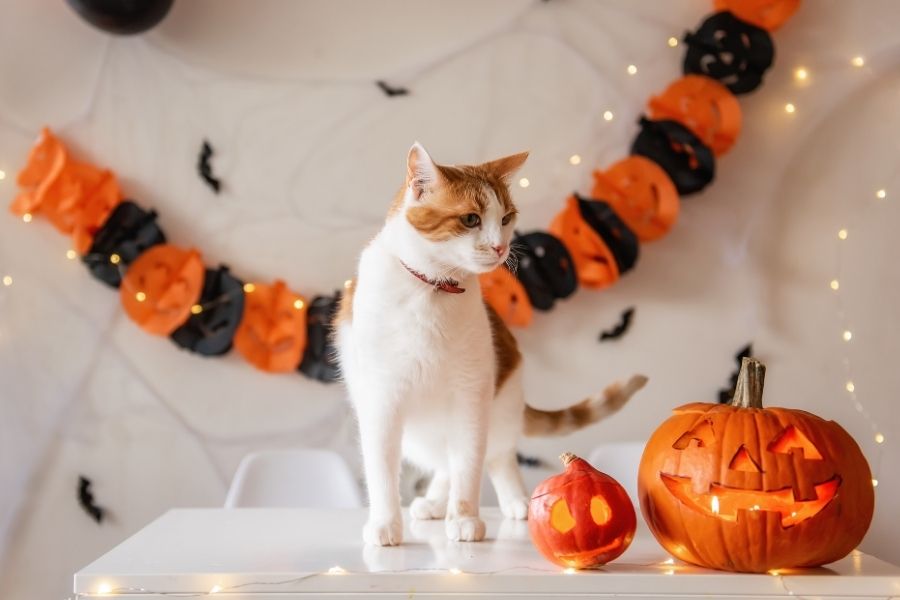
Dogs get most of the attention when it comes to Halloween candy dangers, but cat owners have real reason to pay attention too. Can cats eat Halloween candy? The short answer is no. While cats are less likely than dogs to devour an entire bowl of candy in one sitting, the individual ingredients in Halloween treats pose genuine risks to feline health, and some of the most dangerous substances require only small amounts to cause serious harm. Cats are curious, opportunistic, and often underestimated by their owners when it comes to getting into things they shouldn’t. A candy bowl left on a low table, a piece of chocolate dropped on the floor, or a gummy bear within batting distance is all it takes. This guide covers every major Halloween candy type from a cat safety perspective, what symptoms to watch for, and exactly what to do if your cat makes contact with something they shouldn’t.
Can Cats Eat Halloween Candy? Here’s the Direct Answer
No. No category of Halloween candy is appropriate for cats. This applies to chocolate, sugar-free candies, fruit-flavored gummies, hard candies, caramels, and novelty treats. Even candies that are not acutely toxic can cause gastrointestinal distress, discomfort, and other secondary issues when consumed by cats.
Cats are obligate carnivores. Their digestive systems are not built to process sugar, artificial sweeteners, cocoa compounds, or most of the ingredients that make Halloween candy enjoyable for humans. Unlike dogs, cats cannot taste sweetness, which means they are not drawn to candy for the flavor. When a cat interacts with candy, it is typically out of curiosity, the smell, or the texture rather than the taste.
The Halloween candy toxic to cats concern centers on a few specific ingredients. Theobromine from chocolate, xylitol in sugar-free products, and the physical hazards of wrappers and sticks all represent real risk. Understanding which candies carry the highest threat level helps cat owners make fast, accurate decisions if their cat makes contact with something suspicious.
Halloween Candy That Is Most Dangerous for Cats
Some candy categories carry much higher risk than others. Knowing the breakdown allows you to prioritize your response.
Chocolate: All forms of chocolate contain theobromine, a compound that cats metabolize even more slowly than dogs. Dark chocolate and baking chocolate have the highest concentration, but milk chocolate and white chocolate also pose risk. Cat ate chocolate symptoms include vomiting, diarrhea, elevated heart rate, restlessness, trembling, and in severe cases, seizures. Because cats are generally smaller than dogs, a proportionally smaller amount can cause significant harm.
Sugar-free candies containing xylitol: Xylitol poisoning in cats is less studied than in dogs, but current veterinary understanding indicates cats are susceptible to its effects, including potential blood sugar disruption and liver stress. Sugar-free gummies, breath mints, and certain novelty Halloween candies often contain xylitol. Always check ingredient labels.
Raisins and grape-flavored products: Grapes and raisins are nephrotoxic to cats. The toxic mechanism is not fully understood, which makes it impossible to establish a safe amount. Any raisin ingestion by a cat should be treated as a situation requiring veterinary contact.
Macadamia nuts: Associated with weakness, tremors, and temperature dysregulation in cats as in dogs. Present in some mixed candy bags and novelty treats.
Candy wrappers, sticks, and foil: These are physical hazards. Cats that chew or swallow wrappers or stick portions risk intestinal obstruction, which can become a surgical situation if the material does not pass.
If you notice any distress, contact your nearest veterinarian promptly. Waiting to see if symptoms develop is never the right approach when a specific toxic ingredient was consumed.
Signs That Your Cat Ate Halloween Candy
Cat ate chocolate symptoms and other candy-related reactions can appear within minutes to hours depending on what was consumed. Knowing what to look for helps you act before the situation escalates.
- Vomiting: Often the first visible sign, can occur shortly after ingestion of any number of candy types
- Diarrhea: May follow vomiting or appear alone as a gastrointestinal response
- Lethargy or withdrawal: A cat that suddenly retreats, refuses interaction, or appears limp and unresponsive is showing a systemic stress response
- Rapid breathing or elevated heart rate: Visible through chest movement or detected by gently placing a hand on the chest
- Trembling or muscle twitching: Neurological sign, particularly associated with theobromine toxicity
- Dilated pupils: May indicate neurological impact or extreme stress response
- Loss of coordination: Stumbling, falling, or inability to walk normally
- Drooling more than usual: Especially prominent after glow stick contact or exposure to strongly flavored substances, but can also signal nausea from candy ingestion
Because cats often mask illness as a survival instinct, some of these signs can be subtle. A cat that simply refuses food, seems quiet, and hides more than usual after Halloween should be assessed even if no dramatic symptoms are visible.
What to Do If Your Cat Ate Halloween Candy
The response plan is straightforward, but speed matters. Halloween candy toxic to cats situations are nearly always managed more effectively with early intervention.
First, identify what your cat ate. Check the floor, the candy bowl, and any accessible surfaces. Look at ingredient labels on any nearby products and photograph the packaging with your phone. Note when you think the exposure occurred.
Second, call your veterinarian or a pet poison hotline immediately with your cat’s weight and the information you gathered. They will advise whether you need to come in now, monitor at home with specific criteria, or take other steps. Do not attempt to induce vomiting in a cat without direct veterinary instruction. Cats respond differently to this than dogs, and the technique must be performed correctly to avoid additional harm.
Third, keep your cat warm, calm, and confined to a quiet space while you wait. Limit stimulation. Do not offer food or water unless your veterinarian specifically says to.
In Mahopac, NY, the October weather often keeps doors and windows partially open, which allows outdoor Halloween activity to create additional stress for indoor cats already sensitized to the night’s unusual sounds and activity. Managing your cat’s environment as a whole, not just the candy bowl, is part of protecting them.
Safe Halloween Treats for Cats and How to Celebrate Safely
Just because cats cannot eat Halloween candy does not mean they have to be excluded from the festivity. There are safe Halloween treats for cats that let them participate in a species-appropriate way.
Plain cooked chicken or turkey in very small portions is always a safe option. Commercial cat treats from a reputable brand in Halloween-themed packaging are widely available and a simple win. Small pieces of plain, cooked fish with no seasoning or bones are another cat-friendly choice. Freeze-dried meat treats designed for cats work well as a special Halloween offering.
The xylitol poisoning in cats risk makes it especially important to keep all human Halloween food out of reach, including baked goods made with xylitol-containing sweeteners, sugar-free beverages, and protein bars that often sneak this ingredient in unexpectedly.
Position all candy, human treats, and baked goods in sealed containers stored above cat-jumping height. Remind household members and guests that no candy should be offered to the cat under any circumstance, even “just a tiny piece.” The sentiment is kind, but the risk is not worth it.
South Putnam Animal Hospital is here to support cat owners in making smart, informed choices about pet safety every season. Understanding that cats can eat Halloween candy means staying one step ahead of a situation that is entirely preventable with a little preparation. Bringing your cat in for routine veterinary care before the holidays also ensures any pre-existing sensitivities or health concerns are addressed before seasonal hazards arrive. Book an appointment today.
Frequently Asked Questions
Q: Can cats eat a small piece of milk chocolate? Ans: No amount of chocolate is recommended for cats. While milk chocolate contains lower concentrations of theobromine than dark or baking chocolate, cats metabolize this compound very slowly and are at risk even from small amounts relative to their body size. If your cat ate any chocolate, contact your veterinarian with your cat’s weight and the type and estimated amount consumed.
Q: Is xylitol dangerous for cats the way it is for dogs? Ans: Current veterinary understanding indicates that xylitol poses risk to cats, though the research base is less extensive than for dogs. The primary concern is blood sugar disruption and potential liver effects. Any cat exposure to xylitol-containing products should be reported to your veterinarian immediately.
Q: My cat ate a candy wrapper. Should I be worried? Ans: Potentially yes. A small piece of thin foil or cellophane may pass without issue in a healthy adult cat, but larger pieces, sticks, and hard plastic packaging can cause intestinal blockage. Monitor your cat for vomiting, loss of appetite, lethargy, or failure to have a bowel movement in 24 hours. Contact your veterinarian if any of these signs appear.
Q: Why would a cat eat Halloween candy if they can’t taste sweetness? Ans: Cats investigate objects through smell, texture, and movement rather than taste. A candy that smells interesting, has a texture to chew, or rolls on the floor when batted is appealing to a curious cat regardless of flavor. Wrappers that crinkle are especially attractive. The hazard is not that cats crave candy, but that they may ingest it incidentally while playing with or investigating it.
Q: What treats can I give my cat on Halloween that are safe? Ans: Small pieces of plain cooked chicken or turkey without seasoning, commercial cat treats from a reputable brand, freeze-dried meat treats, or a small amount of plain cooked fish are all appropriate options. Keep portions small, avoid anything with added salt, seasoning, or sweeteners, and check all commercial treats for ingredient integrity before offering them.