$50 Off First Visit For New Clients

Why Microchipping Your Pet is the Smartest Decision You Can Make as a Pet Owner
Few moments feel more frightening than realizing your pet has disappeared. Open gates, broken leashes, loud storms, and unexpected escapes can happen faster than most owners expect. Many lost pets never make it home simply because their identification is missing or outdated. Microchipping offers a reliable way to reconnect lost pets with their families when collars or tags are no longer available.
If you’re a pet owner in Mahopac, NY, this blog is especially for you. Learning how pet microchipping works can help you better protect your dog or cat from becoming permanently lost. Scheduling a visit with a reliable veterinarian can also help you understand whether microchipping is the right step for your pet’s safety plan.
Permanent Identification Helps Lost Pets Return Faster
Collars and ID tags remain helpful, though they can break, slip off, or become unreadable over time. Microchips provide permanent identification that stays with your pet throughout life.
A microchip contains a unique identification number linked to your contact information in a secure database. Veterinary clinics, shelters, and animal control facilities can scan the chip to help identify your pet.
Benefits of permanent identification include:
- Reliable identification: Chips remain in place beneath the skin.
- Improved recovery chances: Lost pets are easier to identify quickly.
- Long-term durability: Microchips do not require charging or batteries.
- Backup protection: Chips still work even if collars disappear.
- Faster shelter reunions: Staff can contact owners more efficiently.
Microchipping greatly improves the chances of safely bringing lost pets home.
Understanding How Pet Microchips Actually Work
Many pet owners assume microchips contain GPS tracking systems. Microchips actually function differently.
Tiny Chips Store Important Identification Numbers
Pet microchips are very small electronic devices placed beneath the skin, usually between the shoulder blades.
Each chip contains:
- A unique identification number
- Radio-frequency technology
- Secure database registration information
Microchips activate only when scanned with a compatible scanner. No battery or internal power source is required.
Scanners Help Shelters Identify Missing Pets
Animal shelters, veterinary clinics, and rescue organizations use handheld scanners to read microchip numbers.
After scanning, staff members access the registration database to locate:
- Owner names
- Phone numbers
- Address information
- Emergency contacts
Updated contact information remains essential for successful reunions.
Indoor Pets Also Benefit From Microchipping
Many owners believe indoor pets face little risk of becoming lost. Indoor cats and dogs can still escape unexpectedly through open doors, damaged screens, or emergencies.
Common escape situations include:
- Guests leaving doors open
- Fireworks or thunderstorms are causing panic
- Home repairs
- Movers entering the house
- Emergency evacuations
Microchipping provides additional protection, even for pets that spend most of their lives indoors.
Puppies and Kittens Can Receive Microchips Early
Microchipping can often occur during puppyhood or kittenhood once pets reach an appropriate age and size.
Many veterinarians perform microchipping during:
- Spay procedures
- Neuter procedures
- Vaccination appointments
- Initial wellness visits
Early microchipping helps ensure identification remains active throughout your pet’s life.
The Procedure Takes Only a Few Moments
Many pet owners worry that microchipping may feel painful or invasive for their pets. The procedure itself is quick and relatively simple.
Microchip Placement Happens Beneath The Skin
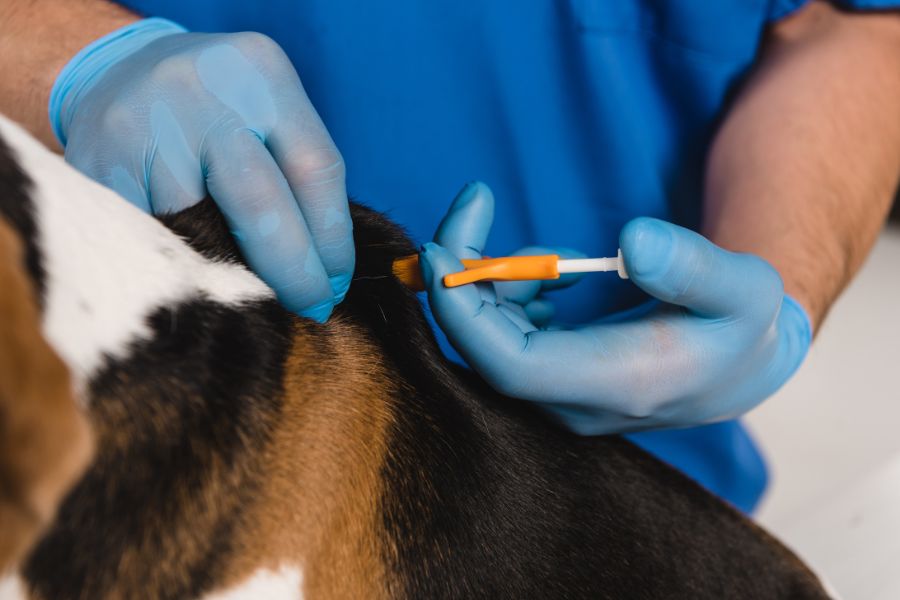
Veterinarians insert the chip using a sterile applicator beneath the loose skin between the shoulder blades.
The process often resembles a routine vaccination appointment.
Most pets experience:
- Brief discomfort
- Minimal recovery time
- No need for anesthesia
- Immediate return to normal activities
Microchips remain safely positioned beneath the skin after placement.
Registration Matters Just as Much Afterward
A microchip only works properly when registration information stays accurate.
Important registration steps include:
- Adding current phone numbers: Outdated numbers delay reunions.
- Updating addresses: Moves should always trigger updates.
- Including backup contacts: Secondary contacts improve communication.
- Confirming registration completion: Unregistered chips provide limited value.
Many lost pets cannot be reunited with their owners due to outdated registration details rather than missing chips.
Travel Situations Increase Identification Importance
Travel creates additional escape risks for pets unfamiliar with temporary environments.
Microchipping becomes especially valuable during:
- Road trips
- Hotel stays
- Campground visits
- Air travel
- Boarding arrangements
- Relocation moves
Unexpected noise, stress, or unfamiliar surroundings can increase the likelihood that pets will slip away.
Natural Disasters Often Separate Families and Pets
Storms, floods, fires, and emergency evacuations sometimes force pets and owners apart unexpectedly.
Microchips improve identification during chaotic situations when:
- Collars become lost
- Shelters fill quickly
- Pets travel across large distances
- Families relocate temporarily
Permanent identification becomes particularly important during emergency recovery efforts.
Older Pets Still Benefit From Microchipping Protection
Senior pets may wander due to cognitive changes, hearing loss, or confusion. Older pets without reliable identification face additional risks if they become lost.
Reasons older pets still need microchips include:
- Increased confusion outdoors
- Reduced ability to navigate home
- Medical conditions requiring medication
- Greater physical vulnerability
Permanent identification supports safer recovery for aging pets.
Preventive pet care using microchips helps reduce uncertainty during stressful situations involving missing animals. Microchipping, wellness exams, and updated records all contribute to stronger long-term pet safety planning.
Common Myths Often Delay Important Decisions
Several misconceptions prevent pet owners from considering microchipping earlier.
Microchips Do Not Replace GPS Tracking Devices
Microchips cannot actively track a pet’s location in real time. GPS collars serve a different purpose entirely.
Microchips instead provide:
- Permanent identification
- Shelter scanning capability
- Owner contact access
Combining GPS devices with microchips may provide additional protection.
Chips cannot Store Medical Records Directly.
Microchips contain identification numbers rather than detailed health records. Veterinary clinics use the number to access the information from the linked database.
Owners should still maintain separate medical documentation for travel and emergencies.
Microchipping Supports Responsible Pet Ownership Habits
Responsible pet care includes planning for unexpected situations before they happen. Identification plays an important role in long-term safety planning for both dogs and cats.
Helpful safety habits include:
- Keeping collars updated
- Checking fences regularly
- Supervising outdoor time
- Maintaining current registration information
- Scheduling routine wellness visits
Microchipping works best alongside these additional safety practices.
Small Precautions Can Prevent Bigger Heartbreak
Microchipping offers pet owners added reassurance during unexpected situations involving lost pets. Permanent identification improves recovery chances, supports shelter reunions, and provides backup protection when collars or tags disappear unexpectedly.
If you’re in Mahopac and looking for pet microchipping, book an appointment with South Putnam Animal Hospital. Our team will help explain the microchipping process, properly register your pet’s information, and answer questions about long-term identification and pet safety planning.
FAQs
1. Can microchips stop working as pets get older?
Microchips rarely fail over time. Most remain functional for life once implanted properly, though veterinarians may occasionally scan pets during wellness visits to confirm chip readability and placement.
2. Why do shelters scan pets multiple times?
Microchips sometimes shift slightly beneath the skin. Multiple scans improve detection accuracy and help shelters locate chips that are not at the original implantation site.
3. Can two pets accidentally share the same microchip number?
Microchip numbers remain unique to each pet. Registration databases use those identification numbers to securely connect pets with owners’ contact information.
4. Should indoor cats still wear collars after microchipping?
Microchips work best alongside visible identification tags. Collars provide immediate contact information for neighbors, while microchips offer permanent backup identification if collars become lost.
5. What happens when ownership of a pet changes?
Microchip registration information should be transferred immediately upon adoption or a change in ownership. Updated records help prevent confusion and improve the chances of successful reunification if pets are later lost.