$50 Off First Visit For New Clients


Discover Your Dog’s Needs Through Diagnostic Care
Unexpected changes in your dog’s behavior or health can raise questions that require more than observation alone. At South Putnam Animal Hospital, we focus on uncovering those answers through advanced testing and detailed evaluations. We proudly provide dog diagnostic care in Mahopac, allowing us to identify concerns early and guide you toward the right next steps with clarity.
Our team takes a thoughtful approach to every case, combining physical exams with modern tools to understand what your dog may be experiencing. Each veterinarian works closely with you to connect symptoms with findings, ensuring every veterinary visit leads to meaningful insight. Diagnostic services play a key role in helping dogs return to normal routines with the right support.
On-Site Laboratory Testing for Faster Answers
An on-site laboratory allows our veterinary team to process many tests quickly, helping reduce delays in understanding your dog’s condition. Immediate results support faster decisions and more efficient care.
Laboratory testing may include:
- Bloodwork analysis: Evaluates organ function, infection indicators, and overall health status.
- Urinalysis testing: Helps detect urinary tract issues, kidney concerns, and metabolic conditions.
- Fecal examination: Identifies parasites and digestive concerns that may affect your dog’s well-being.
Access to in-house testing allows our veterinarians to respond promptly when your dog needs attention, making each veterinary visit more effective.
Clearer Answers Through Advanced Imaging
Some conditions cannot be identified through physical exams alone. Imaging technology allows us to look beneath the surface and evaluate internal structures with clarity.
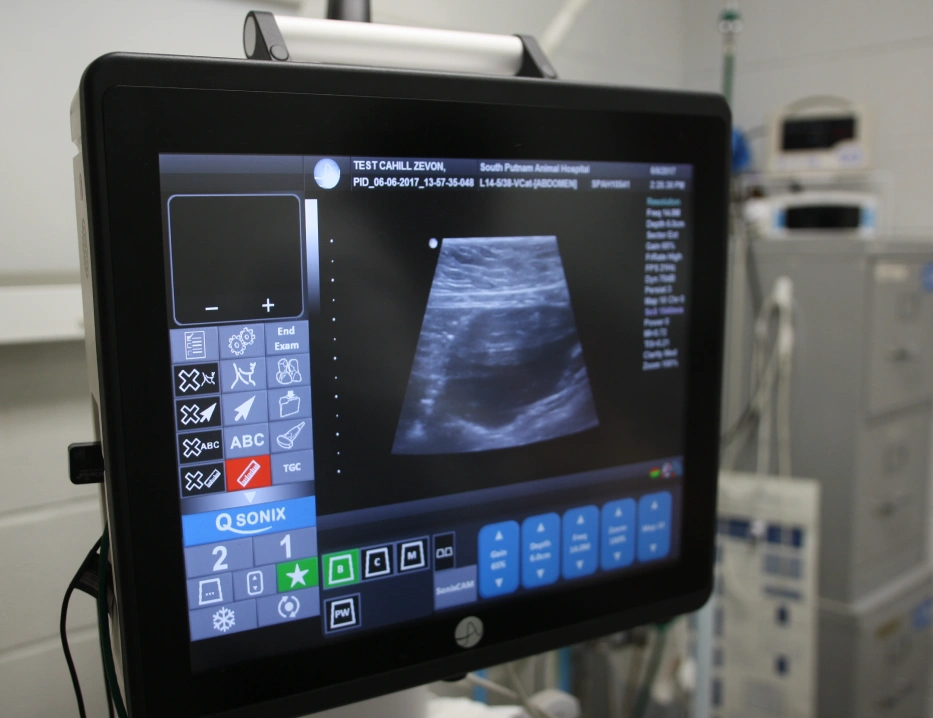
We use X-rays and ultrasounds for dog diagnostics to assess bones, organs, and soft tissues. These tools provide valuable insight into injuries, blockages, and structural abnormalities.
Digital imaging plays a central role in veterinary diagnostics, offering detailed images that guide accurate decision-making. Our veterinary team uses these tools to better understand your dog’s condition and plan the next steps.
Clear Imaging for Bones and Internal Structures
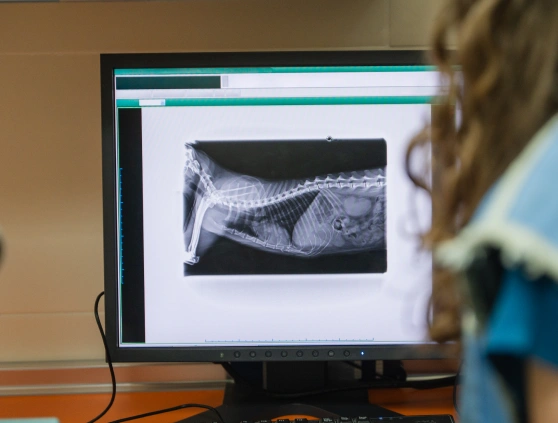
Digital radiology offers a fast and detailed way to evaluate your dog’s skeletal system and internal structures. A vet may recommend radiographs when there are concerns about injuries, breathing issues, or digestive blockages.
Radiology helps in identifying:
- Bone injuries: Detecting fractures or joint abnormalities that may affect mobility.
- Chest conditions: Evaluating lungs and heart size for signs of concern.
- Abdominal issues: Identifying blockages, foreign objects, or organ changes.
Ultrasound for a More Detailed Assessment
Ultrasound imaging provides a closer look at soft tissues and internal organs in real time. It is used to evaluate areas that require more detailed observation.
Ultrasound is often used alongside X-rays to assess organ function and detect abnormalities that may not appear on standard imaging. It can help identify fluid buildup, tissue changes, and internal irregularities.
Our veterinary team uses ultrasound as part of a broader diagnostic approach, ensuring every detail is considered when evaluating your dog’s health.
Electrocardiogram to Evaluate Heart Function Accurately
Heart health plays a critical role in your dog’s overall well-being. An electrocardiogram, or EKG, measures the heart's electrical activity and helps detect irregularities.
A veterinarian may recommend an EKG when symptoms such as fatigue, coughing, or irregular heartbeat appear. The test provides valuable information about heart rhythm and function.
Veterinary diagnostics, such as EKG testing, enable early identification of concerns and guide appropriate care to maintain heart health.
Recognizing Signs That Require Diagnostic Testing
Certain symptoms indicate the need for further evaluation. Paying attention to these changes helps ensure your dog receives timely care.
Common signs include:
- Reduced appetite: Changes in eating habits may signal digestive or systemic issues.
- Low energy levels: Unusual fatigue can indicate underlying health concerns.
- Limping or stiffness: Mobility issues may require imaging or further assessment.
- Vomiting or diarrhea: Persistent symptoms often need laboratory testing for diagnosis.
How Diagnostics Support Ongoing Health Monitoring
Diagnostic testing is not only used when symptoms appear. Routine testing can also support ongoing health monitoring, especially for aging dogs or those with chronic conditions.
A veterinarian may recommend periodic testing to track organ function, monitor existing conditions, and ensure treatments remain effective. Veterinary diagnostics provide valuable data that helps guide adjustments over time. Consistent monitoring helps your dog maintain stability while reducing the likelihood of unexpected health issues.
Book an appointment with South Putnam Animal Hospital to help your dog receive timely testing, clear answers, and supportive care tailored to their needs.